
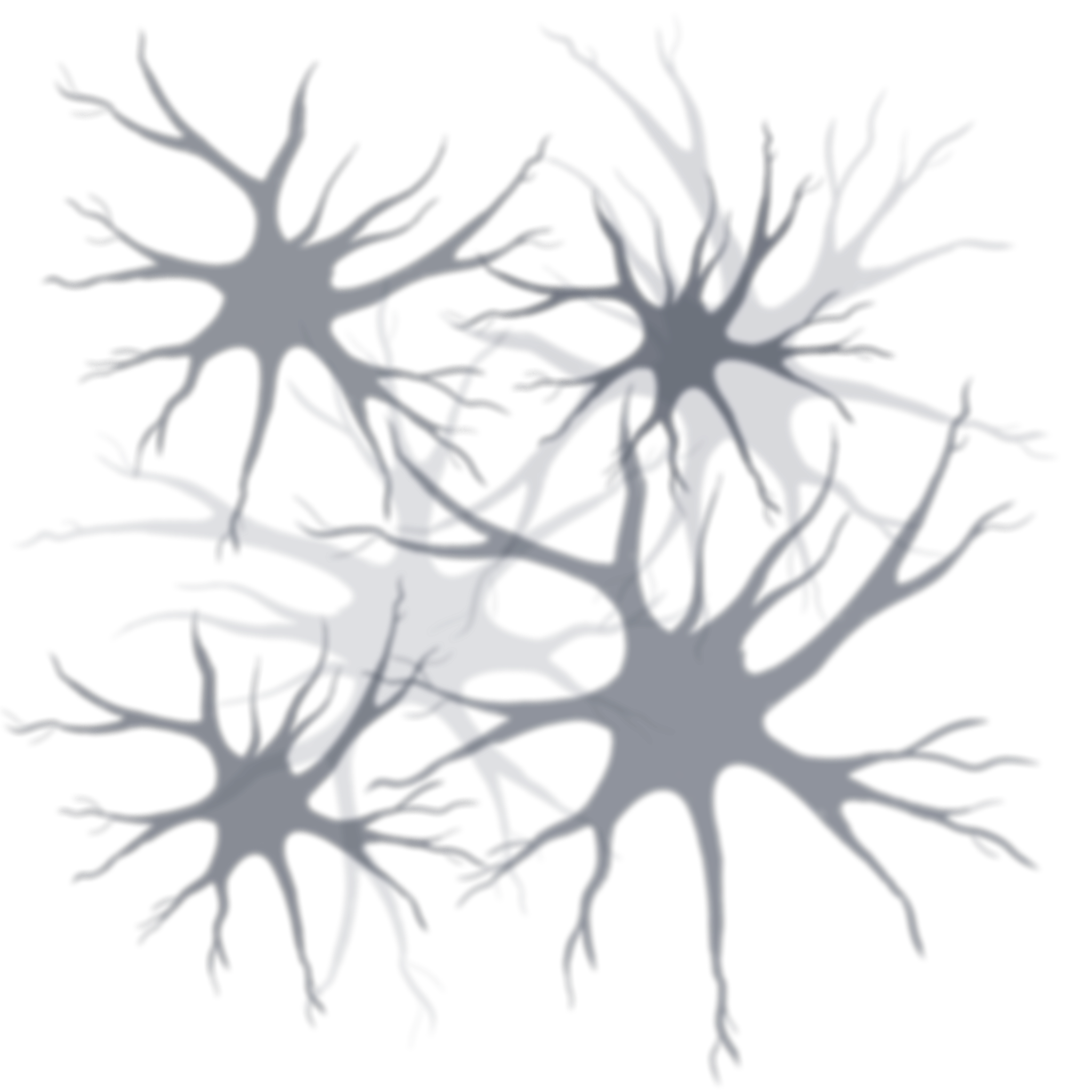


Ollie, our friend at the window sill, is short for oligodendrocyte, the brain cell that wraps neural connections in myelin.



This essay sets down our practice at Sculpted Minds. It describes the strategies we use and the curricular choices we make to address learning gaps and cultivate robust knowledge. Something of the ceramicist's craft attends our work: the student's mind is the living, responsive clay; content is the additive, lending body and form; the teacher is the patient hand that tends the studio. The studio itself—its calm aesthetics, its conversations surfacing lived experience and motivations, its interweaving of ancient rootedness and evolving sensibilities—all of it bears upon the clay.
A guiding image is that of a knowledge strand, which is formed by “kneading” a unit of knowledge (such as a term, a definition, a fact, an axiom, a procedure, or a rhetorical pattern) deep into the clay. And kneading amounts to the repeated effort of recalling content without looking, whether that takes the shape of chanting grammar definitions, reciting the periodic table, or retracing the steps of a procedure. Through guided practice, combinations of these strands are coaxed into larger vessels, or schemas. The studio's hushed vibrancy favors, though never compels, this formation.
Once formed, each schema lives as a mold and must be reconstructed for relevant tasks. At first, a newly formed schema surfaces only with effort; with repeated use, it comes more readily. A strong schema is one that is readily reconstructed in response to a task; a well-founded schema organizes the raw, fluid data of that task accurately and operates reliably. A flawed schema built on a misremembered fact, a misconstrued rule, or a missing step—however sturdy it may seem—cannot hold what the task demands. Schemas both strong and well-founded make knowledge robust: a student can readily summon what is needed, apply it reliably and accurately to a complex task, and use it to make sense of new situations.
Schemas are always works in progress: their contours grow stronger with each use and more intricate with each new demand; under the right conditions, a cracked schema can also be repaired. While we grant that a schema can occasionally take hold in a single exposure, schema formation is generally painstaking and incremental. In an age rife with digital proxies, our commitment to this labor of learning matters more than ever.
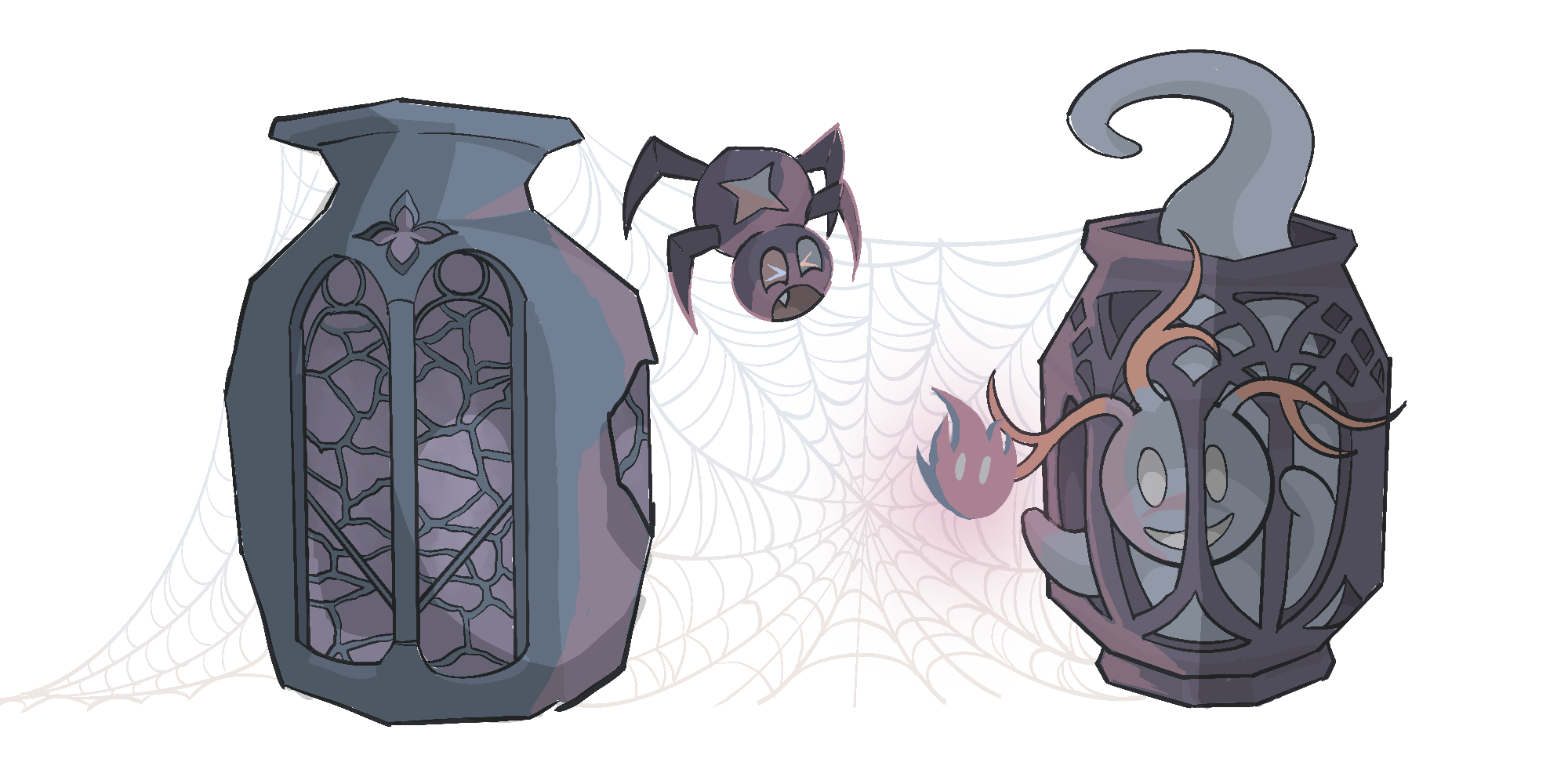
This section turns to the repeated acts by which the studio favors schema formation.
One common strategy is to ask the student to actively recall previously encountered material. Even an unsuccessful attempt at recall, when followed soon afterward by the correct answer, can support later learning (Kornell, Hays, & Bjork, 2009). Cognitive scientists have a name for deliberate recall: retrieval practice, which has been associated with stronger long-term retention than passive rereading (Roediger & Karpicke, 2006). In the studio, retrieval works at every scale: a single axiom, a grammatical pattern, a chain of reasoning, or a long poem.
Another move is to present a fully worked-out model—a solved problem, a demonstrated proof, or a model passage—before the student attempts one independently. In language arts, there is the classical practice of imitation: a model passage is read carefully, copied by hand, paraphrased, and analyzed for structure until the student is able to compose a new piece in its form (Foster, 1989; Murphy, 1990). In math, there is the worked example: a problem solved in full on the page. Because the steps are visible, the student is spared the burden of searching for a solution path and can devote attention to the problem's structure: what principles are at work and what makes this type of problem recognizable (Sweller, van Merriënboer, & Paas, 1998; Chen et al., 2023). The completely solved example is slowly replaced with partially solved versions, with the solution faded step by step and the student filling in the missing portions on each try until the entire problem can be worked alone.
When students are asked to explain the reasoning behind each step of such a model, new material binds to schemas already held (Ausubel, 1968; Chi et al., 1989). When studying why slope is constant along a line, the student connects the algebraic formula to its geometric reason: between any two points on the line, the vertical distance is the "rise" and the horizontal distance is the "run." These distances vary depending on which two points you pick, but the right triangles they form (rise, run, and corresponding stretch of the line as hypotenuse) are all similar because the line crosses every horizontal at the same angle. Since similar triangles have proportional sides, the rise-to-run ratio is the same across them. The studio calls this explanatory process scoring: scratch by scratch, the needle opens the surface until new clay can find purchase.
Out in the world, problems do not always arrive with ready labels of the techniques that solve them. To prepare the student, the studio assigns scrambled practice sets once several schemas within a topic have formed. For example, a student working through factoring may meet four problems in mixed order—3x² − 6x, x² − 9, x² + 6x + 9, and x³ − 8—each requiring a different technique. Without a label announcing the method, the student must inspect each problem before summoning the appropriate schema, whether greatest common factor, difference of squares, perfect square trinomial, or difference of cubes. This is interleaved practice, the mixing of related techniques in a single session. Each new problem, in demanding fresh identification of the relevant schema, helps to build skills of discrimination not required for blocked practice (used when a new schema is first forming); interleaving is also more likely to produce more durable performance than blocked practice alone (Rohrer & Taylor, 2007).
A student who learns to factor quadratics and then returns to it the next day, a week later, and a few more times at widening intervals finds the schema easier to summon each time, until it surfaces without prompting. Whereas massed practice—such as drilling a concept for an hour in a single sitting—typically produces a fleeting fluency, spaced practice produces stronger long-term retention than the same total hours crammed into one sitting (Cepeda, Pashler, Vul, Wixted, & Rohrer, 2006).
Schema formation is typically slow, yet once in a while a single charged moment can do the work of weeks: a striking demonstration, a compelling paradox, or an intense exchange concentrates attention so sharply that the schema sets at once (Cahill & McGaugh, 1998; Greve et al., 2017).
Once a schema is firmly held, the teacher challenges the student to extend it to new cases whose underlying principle is preserved. For example, a student's first encounter with aⁿ is usually of the form n multiplications of a, where n is a counting number: a³ means a · a · a. But the idea of "n multiplications" breaks down when the exponent is zero, a negative integer, or a unit fraction (1 divided by a counting number). The schema for counting-number exponents is extended by naming a property the extension must preserve: for any exponents m and n, aᵐ · aⁿ = aᵐ⁺ⁿ. From this single requirement, with a ≠ 0 and m a counting number, the values of a⁰ and a⁻ᵐ follow as proven consequences once we divide both sides through by aᵐ: a⁰ = 1 because aᵐ · a⁰ = aᵐ⁺⁰ = aᵐ; and a⁻ᵐ = 1/aᵐ because aᵐ · a⁻ᵐ = aᵐ⁻ᵐ = a⁰ = 1. By the same principle, for a > 0 (so the root is real) and n a counting number, raising a to the power 1/n must yield the number whose nth power is a: the nth root of a. Each extension is a small, reasoned step, the schema growing outward by principle (Wu, 2011; Ellis et al., 2022).
While interleaved practice teaches a student to choose the correct schema for a given problem, complexity deepens when a single problem calls for the coordination of several schemas at once. A student fluent in adding numeric fractions and fluent in solving equations may still stall when an equation like 2/(x+1) + 3/x = 5 requires both schemas to act in concert: the fractions must first be combined, or the denominators cleared, before the equation becomes tractable. Neither schema working in isolation can reach the answer. Structured practice that asks several schemas to operate together (Schwartz, Bransford, & Sears, 2005) cultivates what Hatano and Inagaki (1986) called adaptive expertise: the capacity to coordinate multiple schemas at once in novel situations, beyond the routine expertise of executing one schema at a time.
Still more demanding than coordinating schemas within a single problem is integration-as-transfer: the carrying of insight across domains, generally reliant on (even if not assured by) a strong knowledge base in each domain (Haskell, 2001). A student fluent in mathematics, for instance, has not thereby acquired the capacity to read a Shakespearean sonnet with care. Cross-domain integration cannot be forced; it tends to surface when a student has gone deep in two areas and begins, alone or with a teacher's prompt, to see one in the reflected light of the other. The studio aims to build what Haskell calls a culture of transfer, steadily inviting the student to seek connection across domains.
A central practice at the studio is providing immediate, formative feedback—catching a wobble while the clay is still wet and responsive. When a student makes a fresh mistake, the teacher identifies the source of the error and offers a correction. For example, if a student writes (x+2)² = x² + 4, the error reveals an incomplete schema for binomial expansion: the distributive structure of squaring a sum has not quite taken hold. The teacher reviews the error, names any misconceptions that may underlie it, and shows how the correction follows from the structure of the expression. Precise feedback, given in the course of formation and repair, is among the most consequential pedagogical acts (Hattie & Timperley, 2007).

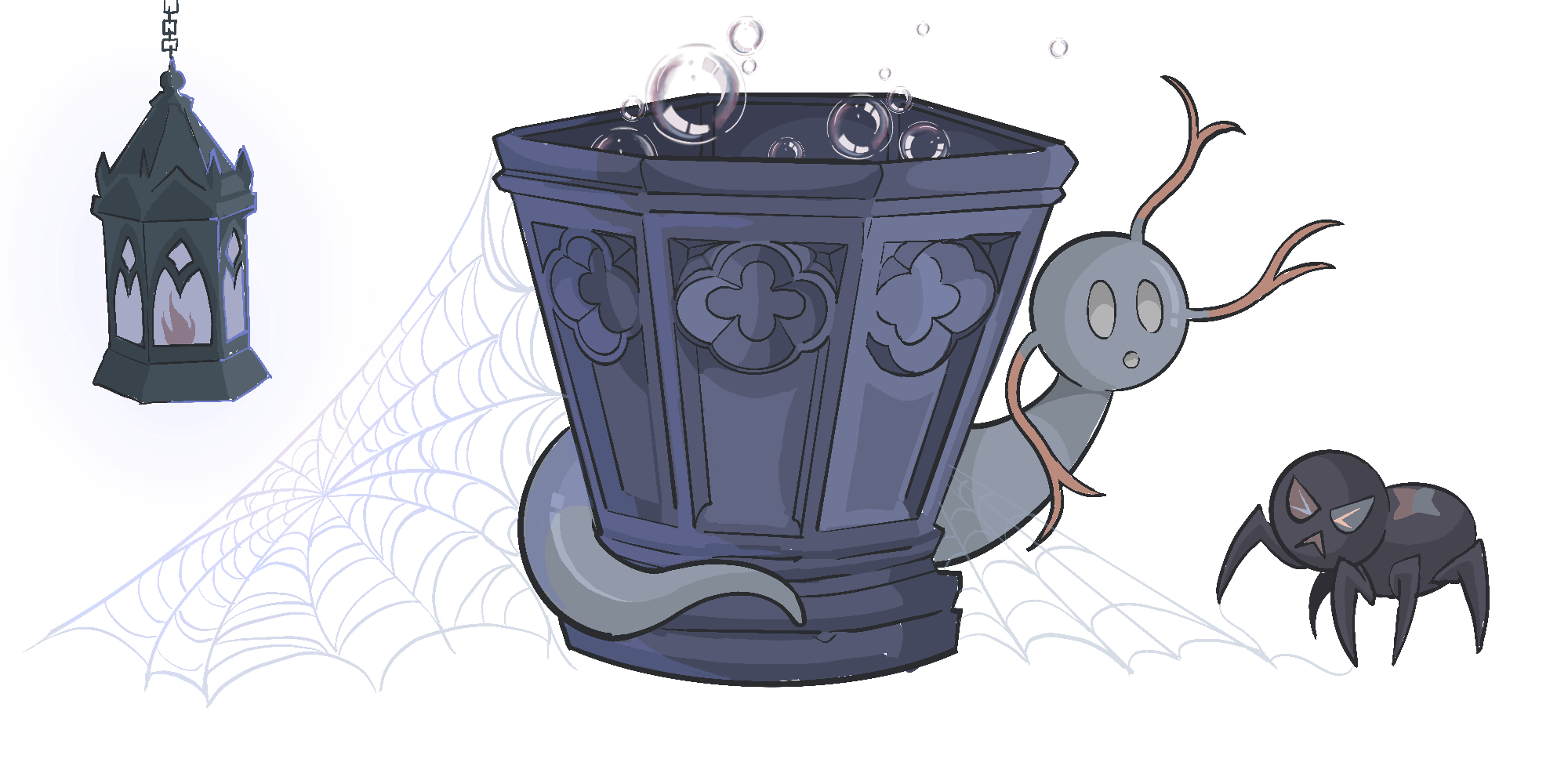
If the wheel is where help is given, the kiln stands for any moment when help is deliberately withheld: an assessment, an unaided practice, a probing question. Kiln moments arrive throughout the work, interspersed with moments at the wheel.
A robust schema survives the fire intact; a flawed one emerges cracked and in need of repair. An example of a flawed schema is the student's inconsistent positioning of a modifying participial phrase: the student broadly recognizes such a phrase yet does not reliably place it beside the noun it modifies. Participle misplacement, such as when a student writes, "The baby crawled to the window wearing a diaper," can lead to absurd literal meanings. Ill-formations can happen during the student's time in the studio, or prior; sometimes they persist over years of unexamined use, their cracks unaddressed until the fire draws them out.


In the Japanese tradition of kintsugi, fractured vessels are mended with lacquer laced with gold. Through weeks of patient labor, the seam is transformed so that, far from being hidden, it becomes the most luminous line on the vessel. The studio equivalent of a fractured vessel is a faulty schema hardened through prolonged, unexamined use. The student, unaware of the flaw, trusts the schema even as it fails the task.
Consider the schema of the five-paragraph essay, a template learned early as ritual, much as a math student may execute "invert and multiply" without knowing why it works. For years the template serves faithfully: the student pours a small body of content into its waiting compartments (introduction, three body paragraphs, conclusion), and the prompt is appeased. But an analytical essay with an evolving thesis asks for what the template cannot give. The form that held the earlier work fractures under the new weight, and because the schema carries no underlying principle that might be extended, nothing in it can answer the demand. The vessel must be repaired.
Rather than offer vague counsel such as "write with better flow," the teacher must first bring about a moment of honest unease in the student—a quiet, clarifying dissatisfaction with the rigid form. A prompt the template cannot contain is enough; against it, the structural flaw, once invisible, shows itself. The teacher then laces the cracks with the principle that had been absent from the start: a thesis worth the name is one that grows. Such a thesis enters as a simple claim, and the shape of the essay follows its growth: one paragraph opens the claim; another weighs the evidence that complicates it; a third concedes what must be conceded and answers what may be answered; another turns the thesis toward the new ground the evidence has opened. The paragraphs are as many as the argument needs, no fewer and no more. The student's earliest sense of thesis and evidence is preserved whole; the gold seam gives it a shape that answers to the living argument rather than to the hollow dictates of a rigid form. The principle of growth is then practiced patiently and held steady in the student's awareness; the teacher keeps a long, quiet vigil, until the old habit, once so swift to take up the work, gives way to an intricacy equal to the argument.
Over time, the brightness of the lacquer settles, but the seam remains in plain view. Our studio shimmers with kintsugi.


Whether we are shaping a new vessel at the wheel or lacing a fractured one with gold, our work depends on the integrity of the additives: any material will add bulk to the clay, but only the refined gives enduring body, strength, and form. The curriculum is that refined substance. Refinement follows the material: each domain has its own grain, structure, and temper, and we fashion or adopt curricula to honor them. And because flaws at the base travel upward through everything built upon them, every curriculum keeps an unswerving attention on predecessor and precursor skills. The former are the direct prerequisites of a given topic, such as the distributive property for factoring; the latter are the deeper foundations on which whole domains rest, such as vocabulary and grammar for reading and writing.
School mathematics is too often taught as a collection of isolated "recipes," and the human brain has limited capacity to keep track of so many techniques when they are not explicitly connected (Wu, 2011). To build the necessary connections, we endorse a mathematics program grounded in deductive reasoning. In this program, precise definitions, axioms, and conventions serve as the foundational additives, kneaded deep into the clay, from which derived concepts emerge. Foundational content is learned by sustained use, with definitions practiced and axioms drilled until they are available without conscious effort. As students deduce new principles from these axioms, the resulting complex schemas are formed through scoring—the deliberate binding of new strands of knowledge to what the student already knows.
The centerpiece of our language arts program is the sentence: vocabulary and grammar are the substance and structure of thought. The novelist and linguist Anthony Burgess described vocabulary as the flesh and grammar as the boniness that flesh needs to walk the earth (Burgess, 1964). A skilled writer, in our view, is first a skilled analyst of sentences, intimate with their underlying structures and workings. To become this analyst, a student learns to diagram using Reed-Kellogg (Reed & Kellogg, 1877), builds vocabulary through the sustained reading of rich literature, and improves syntax and style through deliberate sentence expansion and graduated rhetorical exercises. This careful sentence-craft then carries forward into the construction of paragraphs and précis.
In physics and chemistry, our work unfolds on the page rather than at the lab bench: we teach students to balance first-principles thinking with the data of the problem, to trust the analytical process, and to resist the leap to answers. To build this trust, declarative content (the periodic table, basic equations, units of measure) is learned by deliberate practice; we do not flinch from committing necessary facts to memory. When time allows, we trace a scientific claim back through its history. Knowing how the claim was contested, revised, and eventually canonized allows a student to see science as a human enterprise shaped by particular people in particular contexts (Conant, 1947).


Shapeshifter, the chameleon, digs into the vault and spins ready outputs for the unwitting to swallow.
To evade the labor of learning is as ancient an impulse as learning itself. For generations, students have scavenged answers from pilfered scripts, traded the gravity of tomes for the hollow husks of summaries, and coaxed others to fashion artifacts they would claim as their own. Whether through the furtive glance at a peer's test or the slothful surrender to a commissioned work, prior evasions were a rare conjunction, subject to the willingness of an accomplice and bound by the extent of a resource. Enter generative AI, the latest engine of synthetic mimicry: poised for any task at any hour; harvesting the patterns of a vast, silent vault to answer a whisper of a prompt with a roar of prose; conjuring finished artifacts where minds should have been.
Faceless, frictionless, and latent in the screen's icy glow, this digital ghost is summoned in ever rising numbers for the labor of schoolwork (College Board, 2025; Pew Research Center, 2025). Early evidence shows the cost. In one large-scale study, high school students given free access to GPT-4 during math practice scored worse on later unaided work (Bastani et al., 2025). When the same engine was set to guide rather than to deliver the finished work, this decline was averted. At the 2026 AI+Education Summit, Mehran Sahami, chair of Stanford's computer science department, framed the core problem: schools have long taken the polished product as evidence of mastery, but "AI has broken this assumption," he said. For a student can now hand in polished work that the studio of the mind never made. The struggle is bypassed; so is schema formation.
Yet not every encounter with this engine ends in bypass. The same engine that scrambles a beginner's grasp of the material can sharpen the work of a student practiced in formation (Azaria, Azoulay, & Reches, 2024). Imagine two students set the same task: an email seeking administrative approval for a new school club that each student wishes to create. Both students bring persuasive points to the engine. The first student, lacking formation, merely prompts for a draft and either finds little amiss in the output or feels that something is "off" without being able to pinpoint why. The email goes out as the engine made it, in rambling and sloppy prose. The second student, schooled in sentence-craft, catches the engine's prose drifting into the patterns the studio has warned about: not-A-but-B overload, staccato declaratives, dangling participles, broken progressions, hedge upon hedge in place of the plain request. The student marks faults, correcting them personally or eking out corrections from the engine through carefully engineered prompts; iterations later, the draft has been brought to a polish.
The studio's wager is that its strategies for building robust knowledge remain relevant in the age of AI. A mind formed in the studio's hushed precincts has spent years at the wheel, weathered the kiln, and had its fractures mended. Such a mind carries more than its schemas. It carries the strategies that formed them, and one inheritance subtler still: judgment, absorbed through years of the teacher's gentle vigil and daily example. Faced with the synthetic engine, this inheritance remains unruffled. Where the unformed student waits upon the engine, the formed student directs it, and no output is accepted unexamined. In the end, the studio gives what no engine alone can: the schemas to shape inquiry and the judgment to coax, from the roar of prose, a genuine artifact.

Ausubel, D. P. (1968). Educational psychology: A cognitive view. Holt, Rinehart & Winston.
Azaria, A., Azoulay, R., & Reches, S. (2024). ChatGPT is a remarkable tool—for experts. Data Intelligence, 6(1), 240–296. https://doi.org/10.1162/dint_a_00235
Bastani, H., Bastani, O., Sungu, A., Ge, H., Kabakcı, Ö., & Mariman, R. (2025). Generative AI without guardrails can harm learning: Evidence from high school mathematics. Proceedings of the National Academy of Sciences, 122(26), e2422633122. https://doi.org/10.1073/pnas.2422633122
Burgess, A. (1964). Language made plain. English Universities Press.
Cahill, L., & McGaugh, J. L. (1998). Mechanisms of emotional arousal and lasting declarative memory. Trends in Neurosciences, 21(7), 294–299. https://doi.org/10.1016/S0166-2236(97)01214-9
Cepeda, N. J., Pashler, H., Vul, E., Wixted, J. T., & Rohrer, D. (2006). Distributed practice in verbal recall tasks: A review and quantitative synthesis. Psychological Bulletin, 132(3), 354–380. https://doi.org/10.1037/0033-2909.132.3.354
Chen, O., Retnowati, E., Chan, B. B. K. Y., & Kalyuga, S. (2023). The effect of worked examples on learning solution steps and knowledge transfer. Educational Psychology, 43(8), 914–928. https://doi.org/10.1080/01443410.2023.2273762
Chi, M. T. H., Bassok, M., Lewis, M. W., Reimann, P., & Glaser, R. (1989). Self-explanations: How students study and use examples in learning to solve problems. Cognitive Science, 13(2), 145–182. https://doi.org/10.1207/s15516709cog1302_1
College Board. (2025). U.S. high school students' use of generative artificial intelligence: New evidence from high school students, parents, and educators. College Board Research.
Conant, J. B. (1947). On understanding science: An historical approach. Yale University Press.
Ellis, A. B., Lockwood, E., Tillema, E., & Moore, K. C. (2022). Generalization across multiple mathematical domains: Relating, forming, and extending. Cognition and Instruction, 40(3), 351–384. https://doi.org/10.1080/07370008.2021.2000989
Foster, B. R., Jr. (1989). Classical imitation and reading/writing connections: Analysis and genesis enter the twentieth century [Conference paper]. ERIC. ED307619.
Greve, A., Cooper, E., Tibon, R., & Henson, R. N. (2017). Does prediction error drive one-shot declarative learning? Journal of Memory and Language, 94, 149–165. https://doi.org/10.1016/j.jml.2016.11.001
Haskell, R. E. (2001). Transfer of learning: Cognition, instruction, and reasoning. Academic Press.
Hatano, G., & Inagaki, K. (1986). Two courses of expertise. In H. Stevenson, H. Azuma, & K. Hakuta (Eds.), Child development and education in Japan (pp. 262–272). W. H. Freeman.
Hattie, J., & Timperley, H. (2007). The power of feedback. Review of Educational Research, 77(1), 81–112. https://doi.org/10.3102/003465430298487
Kornell, N., Hays, M. J., & Bjork, R. A. (2009). Unsuccessful retrieval attempts enhance subsequent learning. Journal of Experimental Psychology: Learning, Memory, and Cognition, 35(4), 989–998. https://doi.org/10.1037/a0015729
Murphy, J. J. (Ed.). (1990). A short history of writing instruction: From ancient Greece to twentieth-century America. Hermagoras Press.
Pew Research Center. (2025, January 15). About a quarter of U.S. teens have used ChatGPT for schoolwork — double the share in 2023.
Reed, A., & Kellogg, B. (1877). Higher lessons in English: A work on English grammar and composition. Clark & Maynard.
Roediger, H. L., & Karpicke, J. D. (2006). Test-enhanced learning: Taking memory tests improves long-term retention. Psychological Science, 17(3), 249–255. https://doi.org/10.1111/j.1467-9280.2006.01693.x
Rohrer, D., & Taylor, K. (2007). The shuffling of mathematics practice problems boosts learning. Instructional Science, 35(6), 481–498. https://doi.org/10.1007/s11251-007-9015-8
Sahami, M. (2026, February 11). Remarks at the AI+Education Summit. Stanford University. As reported in Stanford Accelerator for Learning, AI challenges core assumptions in education (February 20, 2026). https://acceleratelearning.stanford.edu/story/ai-challenges-core-assumptions-in-education/
Schwartz, D. L., Bransford, J. D., & Sears, D. (2005). Efficiency and innovation in transfer. In J. P. Mestre (Ed.), Transfer of learning from a modern multidisciplinary perspective (pp. 1–51). Information Age Publishing.
Sweller, J., van Merriënboer, J. J. G., & Paas, F. G. W. C. (1998). Cognitive architecture and instructional design. Educational Psychology Review, 10(3), 251–296. https://doi.org/10.1023/A:1022193728205
Wu, H.-H. (2011). Understanding numbers in elementary school mathematics. American Mathematical Society.